The Seattle Difference: Picking Internet That Works
Choosing among Seattle business internet plans isn’t just about chasing the biggest speed number. For local companies, it’s about balancing speed, reliability, support, and cost — and making sure your provider understands the realities of this city’s hills, waterways, and weather.
This guide walks you through a step-by-step process to choose the best plan for your business. If you’d like a broader overview of what makes internet in Seattle unique, check out our Business Internet Buyer’s Guide.
Why Internet Choice Matters
The Key to Seamless Connectivity in Seattle
In Seattle, selecting the right internet plan is crucial for business success. It’s not just about speed; reliability, support, and cost are equally important. With the city’s diverse geography and weather, having a provider that understands local challenges can make all the difference. A well-chosen plan ensures smooth operations, from video conferencing to cloud computing, without unexpected interruptions or costs.
Choosing an internet provider that offers robust support and transparent pricing is essential. Local providers like Salmon Bay Wireless offer tailored solutions that account for Seattle’s unique infrastructure needs, ensuring your business remains agile and responsive. By prioritizing reliability and local expertise, you can avoid the pitfalls of generic, one-size-fits-all plans and focus on what truly matters: growing your business.
Step 1: Define Your Needs
Every business uses the internet differently. Start by asking:
How many employees and devices need to be online?
Do you run frequent video meetings or cloud-based apps?
Do you upload large files, stream, or process payments all day?
For many small offices (5–10 staff), 100–300 Mbps is plenty. Larger teams or media-heavy companies may need more.
Step 2: Evaluate Speed vs. Reliability
A 1,000 Mbps plan isn’t much use if your connection drops during a customer payment. Reliability should matter as much as speed.
Questions to ask providers:
What uptime percentage do you guarantee?
Do you offer a service-level agreement (SLA)?
How quickly do you respond when outages hit?
Local ISPs like Salmon Bay Wireless are built to handle Seattle’s storm season and infrastructure quirks with faster response times. See how we prepare in our Seattle internet outage prevention guide.
Step 3: Compare Internet Options
Not all internet plans are created equal:
Business vs. Residential Internet – Business-grade plans often include better upload speeds, SLAs, and priority support. Residential plans typically don’t.
Fixed Wireless vs. Fiber/Cable – Fixed wireless avoids trenching delays and works well in neighborhoods like Magnolia and Ballard where wired installs can drag on for months. Learn more in our Fixed Wireless 101 guide.
Step 4: Local vs. National Providers
A national provider may offer bundles, but local providers bring a different advantage:
Seattle-based support (no 1-800 call centers)
Faster installs — usually days, not weeks
Plans tailored to your neighborhood, not generic city-wide marketing
That’s why businesses in Ballard, Magnolia, and Lake Union count on local internet providers like Salmon Bay Wireless.
Step 5: Watch Your Budget
Many national ISPs lure customers with promo pricing, only to raise rates in year two. Look closely at:
Renewal pricing after 12 months
Equipment or overage fees
Installation and cancellation charges
With Salmon Bay Wireless, you get transparent pricing you can budget around — no surprise hikes.
Step 6: Use a Checklist
Before signing any contract, make sure you can answer:
Does this plan meet my team’s speed needs?
What reliability or uptime guarantees are included?
Are there hidden fees or price jumps later?
How quickly can installation happen?
Will I get real support from a local team?
If the answer is unclear for any of these, keep looking.
Common Questions About Seattle Business Internet
Explore answers to the most frequently asked questions about choosing the right internet plan for your small business in Seattle.
What internet speed is ideal for my small business?
For most small businesses in Seattle, a speed range of 100–300 Mbps is sufficient. If your operations involve heavy use of video conferencing or cloud applications, consider opting for higher speeds to ensure smooth performance.
How do local internet providers compare to national ones?
Local providers like Salmon Bay Wireless offer tailored plans that cater to Seattle’s unique geography, ensuring faster response times and personalized customer service compared to national providers.
Why should I choose business internet over residential service?
Business internet plans offer superior upload speeds, service-level agreements (SLAs), and priority support, which are crucial for maintaining business operations efficiently, unlike residential services.
Can I avoid long-term contracts with my internet provider?
Yes, many local providers offer flexible contract terms, allowing businesses to avoid being locked into long-term agreements, unlike many national ISPs that often require multi-year commitments.
Is it possible to set up guest Wi-Fi with business internet?
Absolutely. Business internet plans typically allow you to set up a separate guest network, which is ideal for cafés, shops, or offices that want to offer Wi-Fi access to visitors.
How reliable is local internet service in Seattle?
Local providers like Salmon Bay Wireless design their networks to handle Seattle’s specific challenges, such as weather and geography, ensuring a more reliable connection and quicker response to outages.
Discover Reliable Internet Solutions Today
Ready to experience seamless internet service tailored to your business needs? Explore Salmon Bay Wireless’s offerings and see how our local expertise can benefit your operations. Check availability in your neighborhood now and take the first step towards a more reliable internet experience.
Seattle’s storm season means grey skies, heavy rain, and gusty winds. It also means outages for many businesses. Restaurants lose online orders. Offices lose cloud access. Retailers cannot process payments. The pattern repeats every fall and winter. But outages are not inevitable.
Why Storms Knock Out Service
Most outages trace back to fragile infrastructure:
Underground cables flood with water
Tree limbs and wind damage overhead lines
Power outages knock out equipment
The result is the same: businesses left waiting for crews to fix problems.
Fixed Wireless Changes the Equation
Salmon Bay Wireless uses fixed wireless instead of traditional wiring. That means:
No underground cables vulnerable to flooding
Equipment designed for rain and wind
Local monitoring that allows us to respond quickly
What Businesses Can Do
Even with a reliable provider, businesses can prepare for storm season:
Keep backup power for critical equipment
Test cloud backups for key files
Confirm your provider has quick response times
Why Local Support Matters
When storms hit, national providers route everyone into the same queue. A local ISP knows which neighborhoods are affected and can act faster.
Storms are part of life in Seattle. Outages do not have to be. With the right provider and preparation, your business can stay connected no matter the weather.
Seattle is a city that runs on connection. From startups near Lake Union to coffee shops in Ballard, fast and reliable internet keeps everything moving. But not every building has easy access to fiber or cable. That is where fixed wireless internet Seattle businesses rely on comes in.
This guide explains what fixed wireless internet is, how it works, and why it can be a better choice for many Seattle businesses and households.
What Is Fixed Wireless Internet?
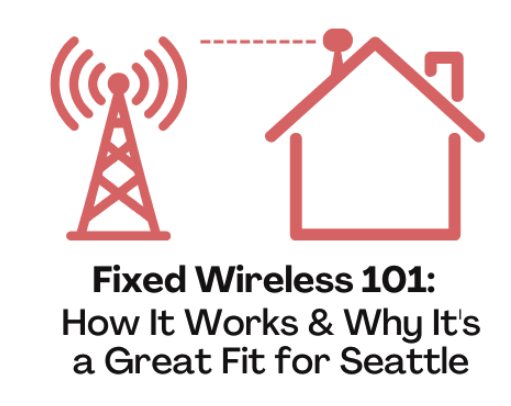
Fixed wireless internet uses radio signals to bring service from a nearby access point to an antenna on your building. Instead of digging up streets for cables, the connection travels wirelessly over short distances.
How it works in simple steps:
A provider sets up antennas on towers or rooftops around Seattle.
A small receiver is installed on your home or business.
The receiver communicates with the nearest antenna, creating a stable link.
From there, you connect your devices through Wi-Fi or Ethernet like any other internet plan.
Why Fixed Wireless Works Well in Seattle
Seattle’s mix of old buildings, dense neighborhoods, and waterfront homes can make wiring tricky. Fixed wireless internet avoids many of those headaches.
Key benefits:
Local support: With providers like Salmon Bay Wireless, you are working with people who know your neighborhood.
Transparent pricing: No bundles you don’t need, no hidden fees.
Reliability: Fixed wireless is designed to handle Seattle’s real-world conditions, from office buildings to houseboats.
Quick installation: Because there is no trenching for fiber, many customers are connected faster.
Fixed Wireless vs. Other Options
How does fixed wireless compare to cable or fiber?
Feature
Cable/Fiber
Fixed Wireless
Availability
Limited by where lines are buried
Available in more areas without new digging
Speed
Very fast in wired neighborhoods
Competitive speeds for business and home use
Installation
May require long waits or construction
Often set up in days, not weeks
Pricing
Intro rates, then steep hikes
Transparent pricing with no surprise jumps
Customer Service
Large call centers
Local support from Seattle-based teams
For many businesses in Ballard, Magnolia, and Lake Union, fixed wireless strikes the balance between speed, reliability, and service.
Where Fixed Wireless Fits Best
Fixed wireless is a good choice for:
Businesses in older buildings where installing fiber is costly or delayed.
Retail shops and cafés that need steady internet for POS systems and guest Wi-Fi.
Home offices where video calls and cloud apps demand stability.
Waterfront homes or houseboats near Lake Union, where wired options may not exist.
Frequently Asked Questions About Fixed Wireless Internet Seattle
Is fixed wireless internet fast enough for business use? Yes. Most businesses find fixed wireless speeds more than enough for video calls, file sharing, and daily operations.
Does fixed wireless work in bad weather? Typical Seattle rain doesn’t affect our service. We use narrow-beam, short-range links with extra signal headroom and backup radios to stay reliable through rain, fog, and snow.
Is fixed wireless reliable? Yes. Because it avoids buried cables that can be cut or flooded, many businesses find it just as reliable as wired internet.
How does pricing compare? Local providers like Salmon Bay Wireless offer transparent pricing without hidden fees or contract surprises.
Where in Seattle can I get fixed wireless? Coverage is available in neighborhoods including Ballard, Magnolia, and Lake Union. Check your address on our service area page or submit a service inquiry.
Final Word
If you are looking for reliable internet without the wait or headaches of big providers, fixed wireless internet Seattle is worth considering. It is fast, stable, and backed by local support from Salmon Bay Wireless.
Contact us today to see if fixed wireless is the right fit for your Seattle business or home.